
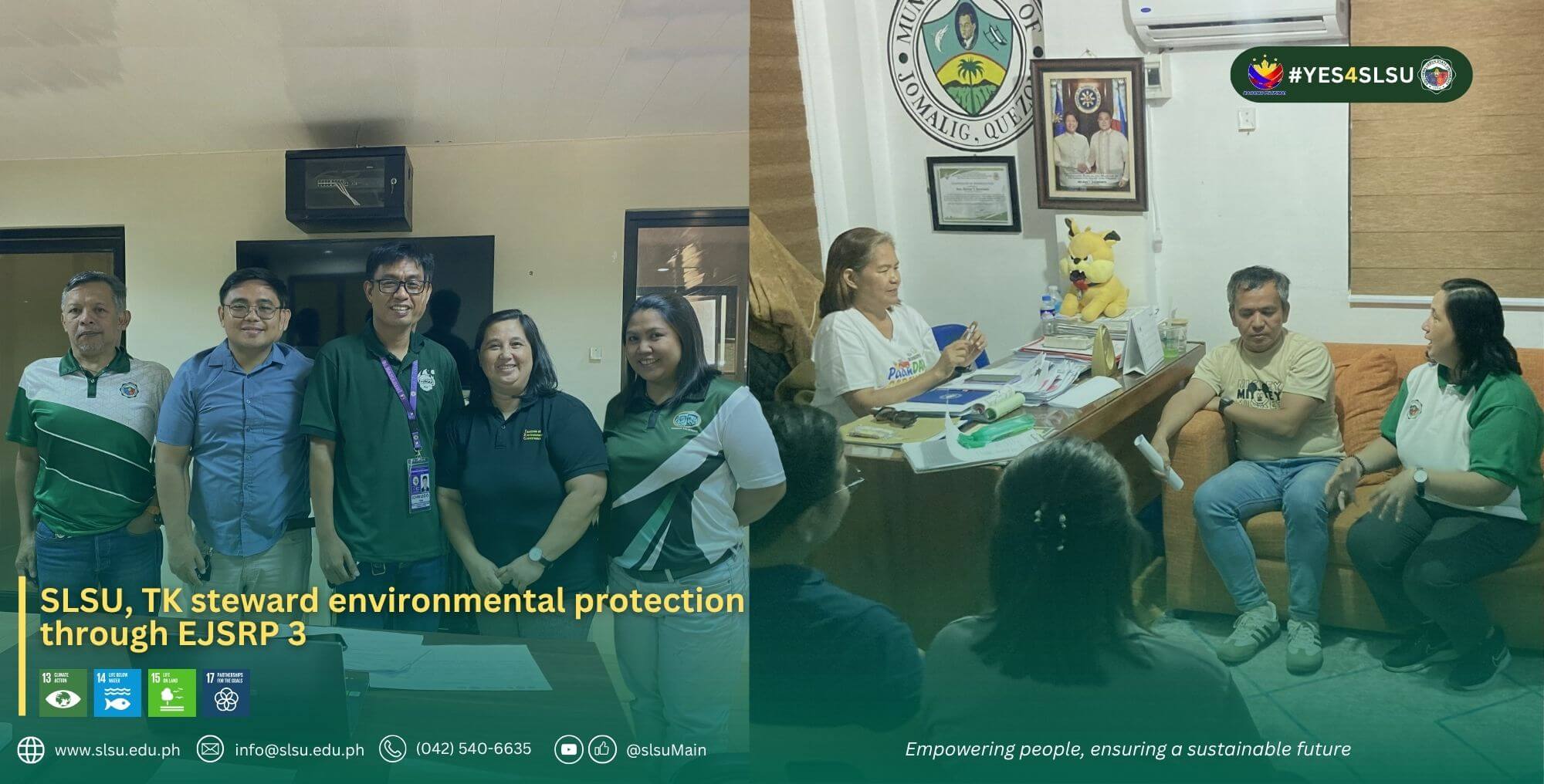
Southern Luzon State University (SLSU) continues to embody its goal of leading initiatives for environmental protection and conservation. One such initiative is the Environmental Justice Sector Reform Project – Phase 3 (EJSRP 3), implemented through the Oscar F. Santos Institute of Environmental Governance (IEG) in partnership with Tanggol Kalikasan (TK) and funded by the United States Department of the Interior International Technical Assistance Program.
The EJSRP 3 Project Implementation: Area Specific Action Plan
EJSRP 3 aims to enhance biodiversity conservation actions and ensure the protection of remaining wildlife habitats by raising awareness and strengthening the capacities and technical skills of local government officials. The project covers several coastal and island municipalities in Quezon Province along the Philippine Rise (Benham Rise), namely: Alabat, Burdeos, General Nakar, Infanta, Jomalig, Panukulan, Patnanungan, Perez, Polillo, Quezon, and Real.
One key component of the project requires each municipality to develop and implement an Area Specific Action Plan (ASAP) tailored to its community’s environmental needs. These plans include capacity building for Bantay Dagat members on the enforcement of fisheries laws and legislation, as well as the establishment of aquasilviculture.
ASAP Monitoring
Following the completion of the municipalities’ ASAP implementation, SLSU IEG and TK conducted a series of monitoring activities to ensure the attainment of the project’s objectives and its sustainability. Likewise, staff of Office and Extension Services joined the monitoring team to conduct a needs assessment survey and interview aimed to identify emerging issues and priority concerns, which determined the capacity-building requirements and recommended appropriate interventions that may develop into extension concepts and projects.
EJSRP 3 aims to enhance biodiversity conservation actions and ensure the protection of remaining wildlife habitats by raising awareness and strengthening the capacities and technical skills of local government officials. The project covers several coastal and island municipalities in Quezon Province along the Philippine Rise (Benham Rise), namely: Alabat, Burdeos, General Nakar, Infanta, Jomalig, Panukulan, Patnanungan, Perez, Polillo, Quezon, and Real.
One key component of the project requires each municipality to develop and implement an Area Specific Action Plan (ASAP) tailored to its community’s environmental needs. These plans include capacity building for Bantay Dagat members on the enforcement of fisheries laws and legislation, as well as the establishment of aquasilviculture.
ASAP Monitoring
Following the completion of the municipalities’ ASAP implementation, SLSU IEG and TK conducted a series of monitoring activities to ensure the attainment of the project’s objectives and its sustainability. Likewise, staff of Office and Extension Services joined the monitoring team to conduct a needs assessment survey and interview aimed to identify emerging issues and priority concerns, which determined the capacity-building requirements and recommended appropriate interventions that may develop into extension concepts and projects.
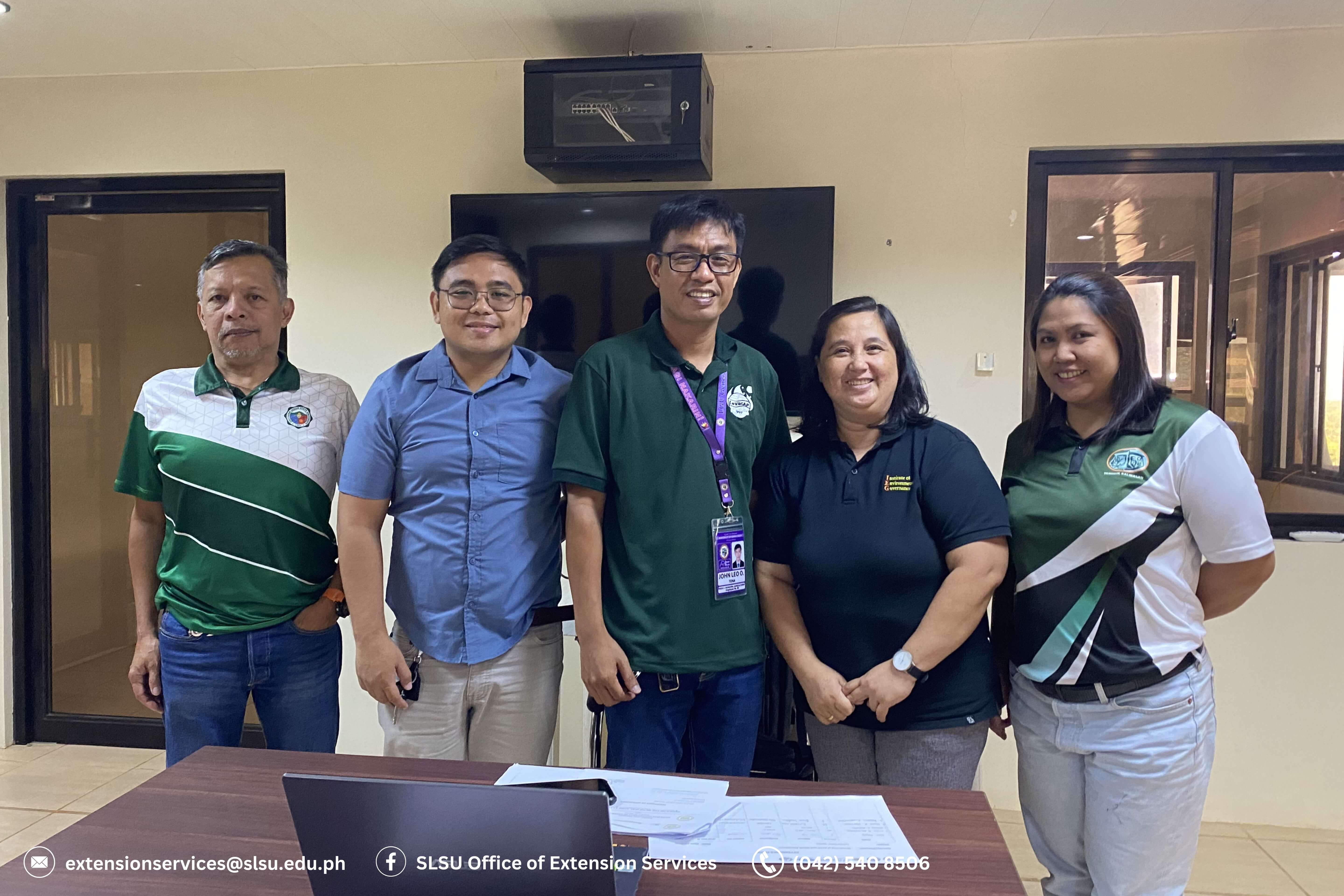
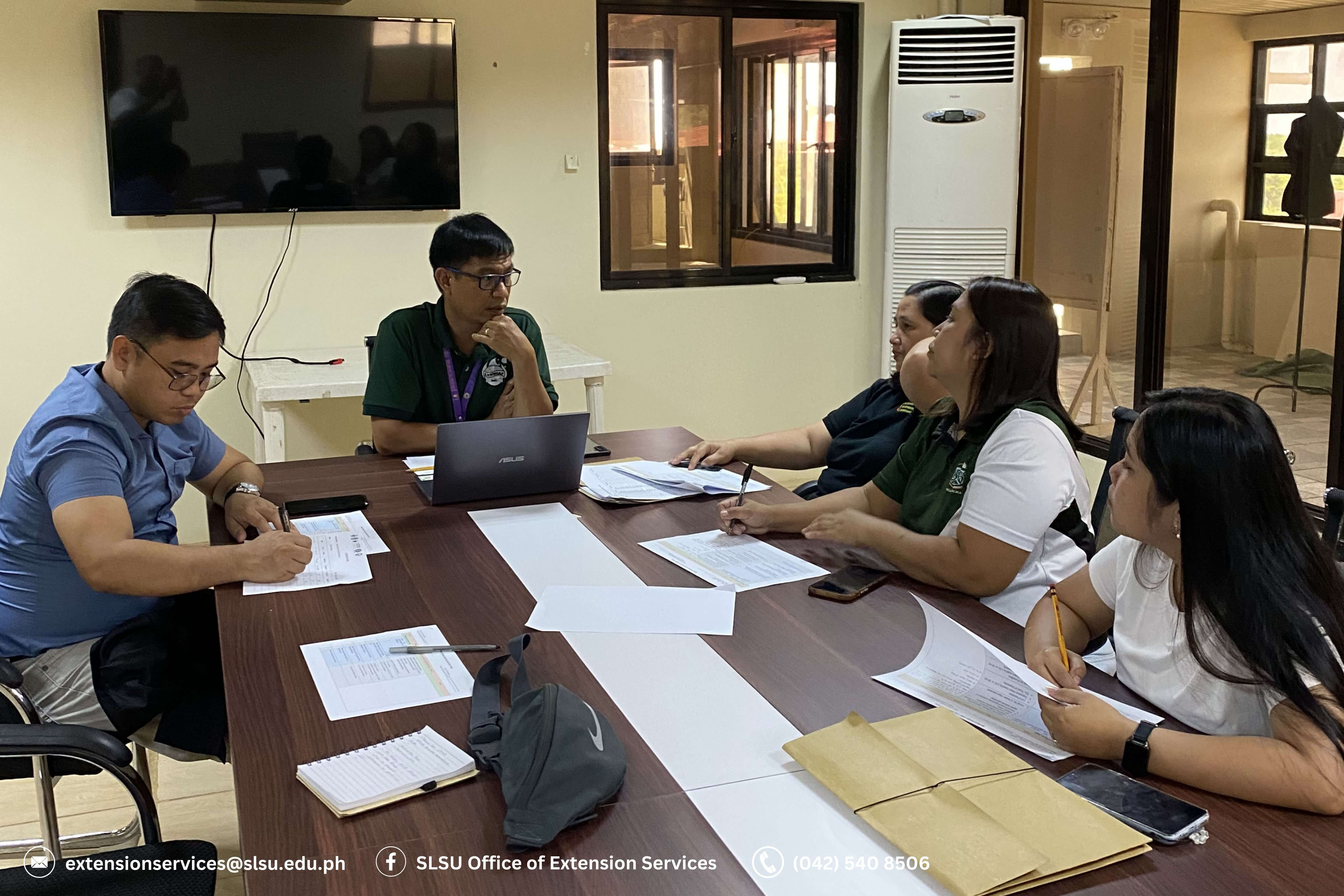
The monitoring team conducted its first monitoring activity for the municipalities of Real and General Nakar, Quezon.
In Real, the team met with Municipal Agriculture Officer (MAO) Filomena R. Azogue and Ms. Jamaica J. Hapa, a staff member of the Municipal Agriculture Office (MAgO). The discussion revealed that the five Bantay Dagat members who underwent training have not yet been formally deputized due to incomplete requirements under the Bureau of Fisheries and Aquatic Resources (BFAR) standards. The municipality also expressed the need for additional capacity-building activities focused on Coastal Resource Management Planning.
Meanwhile, in General Nakar, the team met with MAO John Leo O. Tena. Similar concerns were raised regarding the nine trained Bantay Dagat members who remain without formal deputization. The municipality further requested additional training on Coastal Resource Management Planning and Hito (catfish) farming as an alternative livelihood opportunity for other Bantay Dagat members and volunteers.
In Real, the team met with Municipal Agriculture Officer (MAO) Filomena R. Azogue and Ms. Jamaica J. Hapa, a staff member of the Municipal Agriculture Office (MAgO). The discussion revealed that the five Bantay Dagat members who underwent training have not yet been formally deputized due to incomplete requirements under the Bureau of Fisheries and Aquatic Resources (BFAR) standards. The municipality also expressed the need for additional capacity-building activities focused on Coastal Resource Management Planning.
Meanwhile, in General Nakar, the team met with MAO John Leo O. Tena. Similar concerns were raised regarding the nine trained Bantay Dagat members who remain without formal deputization. The municipality further requested additional training on Coastal Resource Management Planning and Hito (catfish) farming as an alternative livelihood opportunity for other Bantay Dagat members and volunteers.
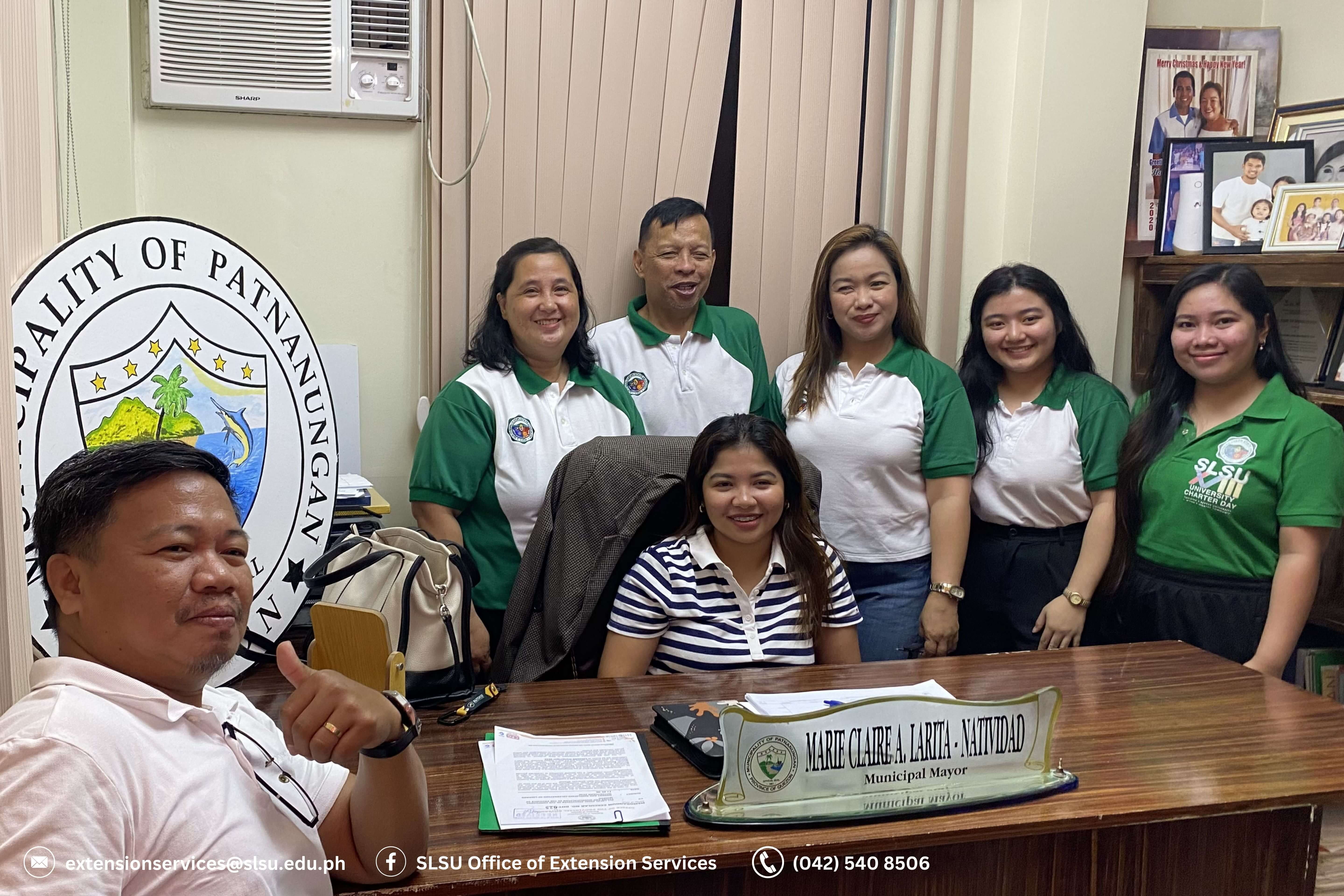
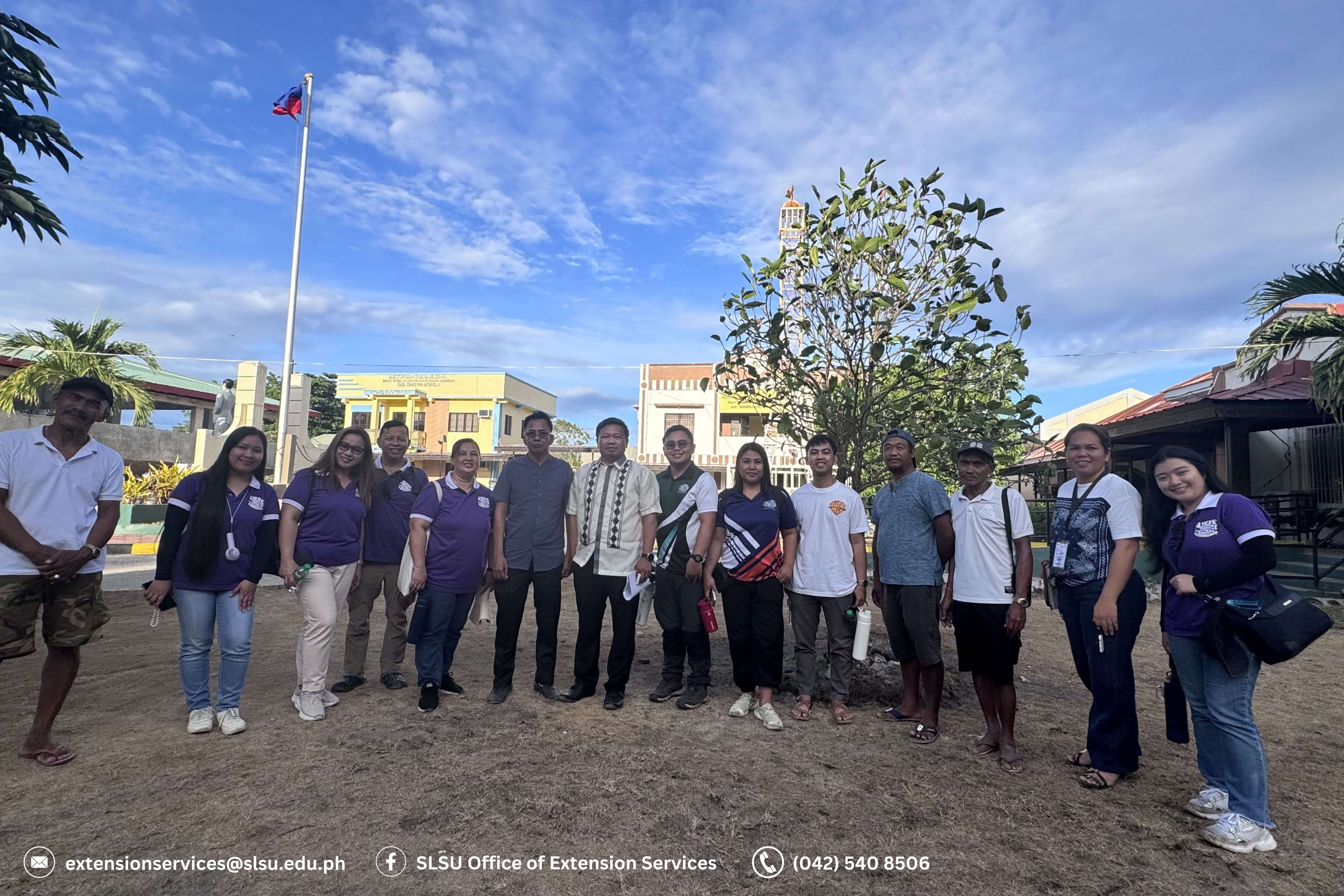
On April 27, 2026, the monitoring team visited the Municipality of Patnanungan and met with Municipal Mayor Claire Larita-Natividad, MAO Eugene Luces, and Municipal Environment and Natural Resources Officer (MENRO) Dennis Aguilar. During the meeting, it was reported that the eleven Bantay Dagat members have already been deputized. The municipality also requested additional training focused on coral management to strengthen marine conservation efforts.
The following day, the team proceeded to the Municipality of Jomalig. Local officials shared that four Bantay Dagat members have been deputized. The municipality likewise expressed interest in additional training programs focused on mangrove development to support their ecotourism initiatives.
A Continuing Commitment
These monitoring activities reflect SLSU’s strong commitment, together with partner institutions and local government units, to enhancing coastal resource protection, strengthening environmental law enforcement, and promoting sustainable, community-based livelihood opportunities for coastal communities.
The following day, the team proceeded to the Municipality of Jomalig. Local officials shared that four Bantay Dagat members have been deputized. The municipality likewise expressed interest in additional training programs focused on mangrove development to support their ecotourism initiatives.
A Continuing Commitment
These monitoring activities reflect SLSU’s strong commitment, together with partner institutions and local government units, to enhancing coastal resource protection, strengthening environmental law enforcement, and promoting sustainable, community-based livelihood opportunities for coastal communities.
Article by: RABarrientos, ARObmerga
Photos by: SAFLaguador
Photos by: SAFLaguador